Living Privacy Screens for Small Residential Backyards With Limited Space Between Neighboring Properties
The short answer: living privacy screens are narrow rows of plants, vines on trellises, or container-grown greenery that block sightlines in tight backyards where a fence feels too bulky or is not allowed. In a space as small as two to four feet wide, columnar evergreens such as Sky Pencil holly or Emerald Green arborvitae, clumping (non-invasive) bamboo, and evergreen vines on a slim trellis can deliver real, year-round privacy within two to three growing seasons without stealing your patio. Pick plants that grow tall rather than wide, match them to your climate and sunlight, and water consistently through the first year.
When houses sit close together, the backyard can feel like a fishbowl: neighboring windows and raised decks look straight in, and a solid fence often makes a small yard feel smaller while blocking breeze and light. This article explains how to plan, plant, and maintain living privacy screens for narrow residential lots, with plant options, layout strategies, realistic costs, and the mistakes that ruin most small-yard screens.
What Living Privacy Screens Are and Why They Suit Small Backyards
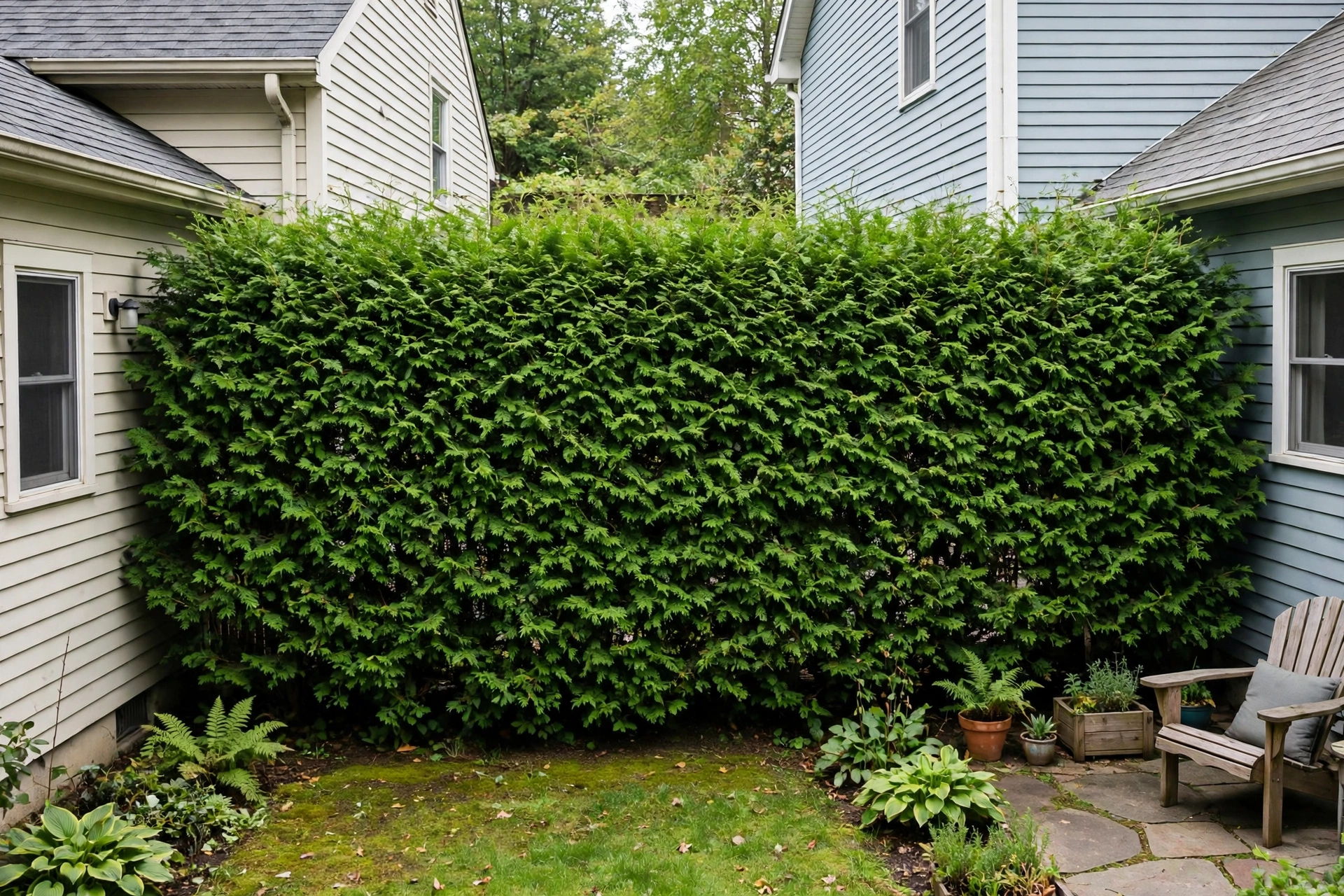
A living privacy screen is a planted barrier, such as a single-row hedge, a line of columnar shrubs, vines on a trellis, or a run of tall containers, whose foliage blocks unwanted views. Unlike a fence, it adds depth, softens hard edges, and changes pleasantly with the seasons.
In tight spaces, living screens have three practical advantages over fencing. First, they use vertical space: many screening plants reach six to twelve feet tall while staying only two to three feet wide. Second, they filter rather than fully block airflow and dappled light, which keeps a small yard from feeling boxed in. Third, a well-chosen screen generally costs less per linear foot than a quality fence and needs only water and an annual trim, while a wood fence needs restaining and eventual replacement.
Measure Your Space and Read the Sightlines Before You Plant
Do not plant around the whole perimeter. Walk your yard, stand where you sit or relax, and note exactly where neighboring windows, decks, or patios have a sightline in. Most small backyards need screening on just one or two sides.
- Available width: Measure the width of the planting strip you can spare. Two feet is enough for vines on a trellis or columnar hollies; three to four feet fits most narrow hedges.
- Sightline height: Estimate the target height. Six feet blocks ground-floor views; eight to ten feet is needed where a neighbor's second story or raised deck overlooks your yard.
- Sun and shade: Check sunlight. Evergreen screening conifers such as arborvitae need generous sun, while cherry laurel, yew, and many vines tolerate partial shade.
- Utilities: Look up and down. Stay clear of utility lines overhead and buried lines below; call your local utility-locating service before digging.
- Ordinances and HOA rules: Review local rules. Many municipalities limit hedge or fence height, and some restrict certain species near property lines or utilities.
Best Plants for Narrow Living Privacy Screens
For small residential backyards, choose plants with a naturally narrow, upright habit. These give you height without width, which is the whole game when neighbors are close.
Columnar Evergreens
Sky Pencil holly, Emerald Green arborvitae, and Degroot's Spire arborvitae are the workhorses of tight-space screening. They grow mostly upward, stay two to three feet wide, and hold dense evergreen foliage year-round. Arborvitae needs full sun and steady water in its first year or two; holly tolerates more shade. Plant them eighteen to thirty-six inches apart in a single row so their sides knit into a continuous wall.
Clumping Bamboo
Clumping bamboo forms dense vertical culms ten to fifteen feet tall in a footprint of only two to three feet. Choose only clumping varieties, such as Fargesia species, which expand slowly from the base rather than sending aggressive runners like running bamboo. It is one of the fastest routes to tall privacy, often filling in within two to three seasons, and appreciates rich soil and steady moisture. In containers it is naturally contained; in the ground, a root barrier is sensible.
Evergreen Vines on a Slim Trellis
When the planting bed is barely two feet wide, a vine on a trellis uses almost no ground at all. Star jasmine offers fragrant spring flowers in warm climates, while English ivy and Virginia creeper are economical climbers for fences and panels. Set a six to eight foot cedar or metal trellis a foot off the fence or wall for air circulation and maintenance access. Expect meaningful coverage in two to four growing seasons with regular training of new shoots.
Ornamental Grasses and Layered Shrubs
For quick, low-cost fill, tall ornamental grasses such as pampas grass or maiden grass reach five to eight feet in a single season, though they die back in winter in cold climates and work best as a seasonal supplement. In front of the tall backbone row, add a lower tier of compact shrubs or boxwood at eighteen to twenty-four inches tall to hide bare lower stems and give the screen a designed look.
Living Screen Methods Compared
Each method below fits a different mix of space, budget, and patience.
Container Screens Versus In-Ground Planting
If you rent, have poor soil, or want results this season, containers are a strong choice. Large pots planted with columnar shrubs or clumping bamboo create a movable screen with no digging. Use pots at least eighteen to twenty inches in diameter for six-foot plants, since undersized containers stunt growth. Group pots closely and vary heights for a layered effect.
In-ground planting is better for permanence and lower long-term effort. Roots spread into the soil, so plants grow faster and need less watering once established. The tradeoff is commitment: you dig once, amend the soil, and the screen stays put.
How to Plant a Narrow Living Privacy Screen
Confirm the layout. Stake the screen line and verify from your usual seats that it blocks the real sightlines.
Call before you dig. Have underground utilities marked and confirm setback and height rules with your city or HOA.
Dig a continuous trench, not individual holes. Go about eighteen inches deep, as wide as your strip allows, and mix compost into heavy clay or pure sand.
Space plants correctly. Columnar evergreens eighteen to thirty-six inches apart; clumping bamboo two to three feet apart; vines one plant per four to six feet of trellis.
Set plants at the right depth. The top of the root ball should sit level with the soil, never buried. Backfill and firm gently to remove air pockets.
Mulch and water deeply. Apply three to four inches of organic mulch away from stems, soak the bed, and run a soaker hose on a timer through the first season.
Train and trim early. Tie vine shoots to the trellis and trim hedge tops lightly from year one so the screen grows dense, not leggy.
Feed and monitor. Apply balanced evergreen fertilizer in early spring, watch for pests or browning, and water during dry spells for two years.
What Living Privacy Screens Cost
Costs below are estimates and vary with plant size, region, and DIY versus hired labor. Plants are generally cheaper per linear foot than lumber, but the savings appear over time: a hedge needs water and trimming while a wood fence needs restaining and eventual replacement.
To save money, buy smaller plants and be patient. A three-gallon arborvitae may start at two to three feet tall but can add three or more feet per year, catching up to larger specimens within a few seasons at a fraction of the price.
Common Mistakes That Ruin Small-Yard Screens
- Over-screening. Screening the whole yard instead of the sightlines, which eats space and makes the garden feel closed in.
- Invasive species. Choosing running bamboo or another aggressive spreader without containment, which can invade neighboring beds.
- No diversity. Planting one species in a long row, so a single pest or disease can take out the whole screen.
- Wrong light. Putting sun-loving conifers in deep shade, where they thin out and stop screening.
- No maintenance access. Planting flush against the fence with no access gap, making the back side untrimmable.
- Underwatering. Skipping first-year watering, the top killer of new hedges; a soaker hose on a timer fixes this.
- No trimming. Never pruning, which lets shrubs shade their own interiors and turn yellow and patchy.
- Sealing yourself in. Blocking your own airflow and light; leave gaps or use vines where breezes matter.
Safety Notes and When to Call a Professional
Living screens are among the safest home improvement projects, but take basic precautions: have utilities located before digging, wear gloves and eye protection with mulch and thorny plants like holly, and hire help for trimming above comfortable reach.
Call a professional when the job exceeds DIY scope: a landscaper for large specimen trees needing machinery, an arborist when planting near mature trees whose roots must not be damaged, and a fence contractor if you need a structural barrier for pets, pools, or security, since plants alone are not a secure enclosure. Fix poor drainage before planting, because screening shrubs in standing water will fail.
Final Thoughts
A living privacy screen turns the narrowest side yard into a genuinely private outdoor room. Start by mapping your real sightlines, choose narrow-growing plants suited to your light and climate, space them correctly, and commit to watering through the first year. This weekend, stake out your screen line and confirm it from your favorite seat. That single test is the difference between a screen that delights you and one that just takes up space.
Frequently Asked Questions
How fast will a living privacy screen give me real privacy?
Most narrow screens deliver meaningful privacy in two to three growing seasons. Bamboo and ornamental grasses are fastest, often filling in within one to two seasons. Columnar evergreens and trellis vines typically need two to four seasons depending on starting size.
What is the narrowest space a living privacy screen can fit in?
A vine on a slim trellis needs only one to two feet of bed width, the best option for the tightest spots. Columnar hollies, arborvitae, and clumping bamboo all fit in two to three feet. For beds under two feet wide, use a row of tall containers instead of in-ground planting.
Will a living screen really block my neighbor's second-story view?
Yes, if you plan for height. Six feet blocks ground-floor windows, but you need eight to ten feet of foliage to block a second-story window or raised deck. Columnar evergreens and clumping bamboo both reach that height. Check local hedge height limits before planting tall species.
Is clumping bamboo safe to plant near a property line?
Clumping bamboo is far safer than running bamboo because it expands slowly from the base instead of sending long underground runners. Still, plant it at least two feet inside your property line and consider a root barrier in narrow beds. Never plant running bamboo near a boundary without heavy-duty containment.
Do living privacy screens need a lot of maintenance?
Less than a fence over the long run. Water deeply through the first one to two years, trim hedges once or twice a year, train vine shoots onto their trellis, and cut ornamental grasses back in late winter. Once established, most screening plants need only occasional drought watering and an annual trim.
Can I build a living privacy screen in containers as a renter?
Absolutely. Tall containers planted with columnar shrubs, clumping bamboo, or grasses create a movable screen with no digging and no permanent changes. Use pots at least eighteen to twenty inches wide for six-foot plants, group them closely, and water more often than in-ground plantings since containers dry out faster.
Should I choose a living screen or just build a fence?
Choose a living screen for greenery, lower long-term maintenance, and a softer look that does not shrink the yard visually. Choose a fence for immediate full-height privacy on day one, a secure enclosure for children or pets, or a pool barrier that meets code. Many homeowners combine both: a low fence for the boundary plus a living screen in front of it.