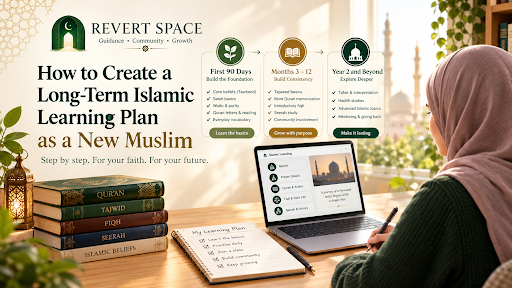
How to Create a Long-Term Islamic Learning Plan as a New Muslim
The first few weeks after taking shahada are usually full of momentum. New Muslims dive into learning prayer, memorizing a few surahs, and picking up basic vocabulary. A structured Islamic learning plan for reverts is what carries that early energy forward once the initial excitement settles into everyday life.
Without a plan, learning tends to happen in bursts. A motivated week gets followed by a quiet month, then guilt sets in, then another burst. A long-term plan replaces that cycle with steady, sustainable progress.
Why Random Learning Runs Out of Steam
Learning Islam without structure isn’t wrong, but it’s fragile. It depends entirely on motivation, and motivation naturally dips. A plan works differently. It breaks a lifelong journey into stages, so progress happens even on days when motivation is low.
There’s also a practical reason structure matters. Islamic knowledge builds in layers. Prayer basics come before deeper fiqh discussions. Quran reading comes before tafsir. Skipping ahead without a foundation usually means backtracking later to fill in gaps.
Stage One: The First 90 Days
The first three months should focus almost entirely on foundations, not depth. This stage typically covers:
- Core beliefs: understanding Tawheed and the basics of faith
- Salah: learning to pray correctly, including the meaning behind each movement
- Wudu and purity basics: the practical requirements before prayer
- Quran letters and basic reading: starting from recognition, not full recitation
- Everyday vocabulary: greetings, common phrases, and prayer terms
This stage isn’t about depth. It’s about building enough of a foundation that daily practice starts to feel natural rather than confusing.
Stage Two: Months Three Through Twelve
Once the basics feel steady, the focus shifts toward consistency and gradual depth. This stage usually includes:
- Tajweed basics: learning correct Quran pronunciation rules
- Expanded Quran memorization: building beyond the shortest surahs
- Introductory fiqh: understanding halal and haram in daily decisions
- Seerah study: learning the life of the Prophet Muhammad ﷺ
- Community involvement: attending classes, study circles, or online groups regularly
This is usually where reverts either build lasting habits or lose momentum, which is exactly why a plan matters most during this stretch.
Stage Three: Year Two and Beyond
After the first year, learning becomes less about catching up and more about depth and specialization. This stage might include:
- Deeper study of tafsir and Quranic interpretation
- Structured hadith studies
- Exploring different areas of Islamic scholarship that personally interest you
- Taking on a mentoring or support role for newer reverts
By this stage, the plan shifts from “what do I need to know” to “what do I want to explore further,” which is a genuinely exciting shift for most reverts.
Building a Weekly Study Rhythm
A long-term plan only works if it fits into real life. A sustainable weekly rhythm often looks like:
- 15 to 20 minutes of Quran reading or memorization most days
- One structured lesson or class session per week
- A short daily reflection or dua practice
- One day set aside for review, rather than new material
Consistency in small amounts beats occasional long study sessions. Based on working with reverts across different learning stages, the ones who stick with daily 15-minute habits consistently outpace those who only study in occasional multi-hour sessions.
Tracking Progress Without Overcomplicating It
Tracking doesn’t need to be complicated. A simple approach works better than an elaborate system that becomes another task to manage:
- Keep a basic list of surahs memorized so far
- Note which prayer and belief topics have been covered
- Mark which classes or courses have been completed
- Review progress monthly, not daily, to avoid burnout from constant checking
Did You Know? Islamic scholars historically studied under structured, staged curriculums, often spending years on foundational texts before moving to advanced scholarship. The idea of pacing knowledge in stages isn’t a modern shortcut, it’s how Islamic learning has always worked.
Common Mistakes New Muslims Make With Long-Term Learning
- Trying to learn everything at once instead of following a staged approach
- Comparing progress to born Muslims who had years of exposure growing up
- Abandoning the plan entirely after missing a few days, instead of just resuming
- Choosing scattered YouTube videos over a structured course, which leads to gaps in foundational knowledge
Pro Tips for Staying Consistent
- Set a fixed, small daily study time rather than an ambitious one you’ll skip
- Join a structured course with built-in pacing instead of designing everything from scratch
- Find an accountability partner or community group going through similar stages
- Revisit and adjust the plan every few months as life circumstances change
Revert Space’s course structure follows this same staged approach, moving from foundational beliefs and prayer through to deeper Quran and Islamic studies content, so new Muslims aren’t left guessing what comes next.
In Short
A long-term Islamic learning plan works best when broken into stages: foundations in the first 90 days, consistency and gradual depth through the first year, and specialization afterward. Small, consistent daily habits paired with a structured course path outperform sporadic bursts of motivation every time.
FAQ Section
Q1: How long should the foundational stage of learning take?
Most reverts spend around the first 90 days on foundations, including core beliefs, prayer, purity basics, and initial Quran reading, before moving into deeper topics.
Q2: Is it okay to learn at a slower pace than this outline suggests?
Yes. These stages are a general guide, not a strict deadline. The goal is steady progress, not speed.
Q3: What if I miss weeks of study due to life getting busy?
Resume where you left off rather than restarting or abandoning the plan. Consistency over the long run matters more than a perfect streak.
Q4: Do I need a formal course, or can I plan my own learning?
Self-directed learning is possible, but a structured course usually provides better pacing and reduces the risk of skipping foundational topics.
Q5: How much daily study time is realistic for a beginner?
Fifteen to twenty minutes of consistent daily study, combined with one weekly lesson, is a realistic and sustainable starting point for most new Muslims.
Q6: How does Revert Space support long-term learning specifically?
Revert Space structures its courses in stages, moving from beginner foundations through to deeper Quran and Islamic studies topics, with community support throughout.
Conclusion
A long-term Islamic learning plan helps new Muslims turn early motivation into steady progress. Start with the basics, build consistent habits, and gradually move toward deeper Quran and Islamic studies without rushing the journey.
With Revert Space, you can follow a structured path designed for new Muslims, making it easier to learn, practice, and grow in your faith one step at a time.