Everest Base Camp Helicopter Tour: Kathmandu to Lukla Helicopter and Lobuche Return Route
Not everyone has twelve spare days to walk into the Khumbu. Maybe you’ve got a short trip to Nepal, a dodgy knee, or a family that won’t last a long trek, and you still want to see Everest properly. That’s usually where an Everest Base Camp Helicopter Tour starts looking like a sensible idea. But the route matters more than most people expect. It isn’t a simple “fly up and fly back” hop, because the order of Kathmandu, Lukla, the high Everest region and Lobuche shapes your timing, your altitude exposure and what you actually get to do on the ground. Below I’ll go through each stage, from flight sequence to weather and the return from Lobuche, and I’ll be upfront about what can change. Himalayan mountain weather has the final say, whatever the itinerary promises.
Kathmandu to Lukla: Where the Helicopter Route Begins
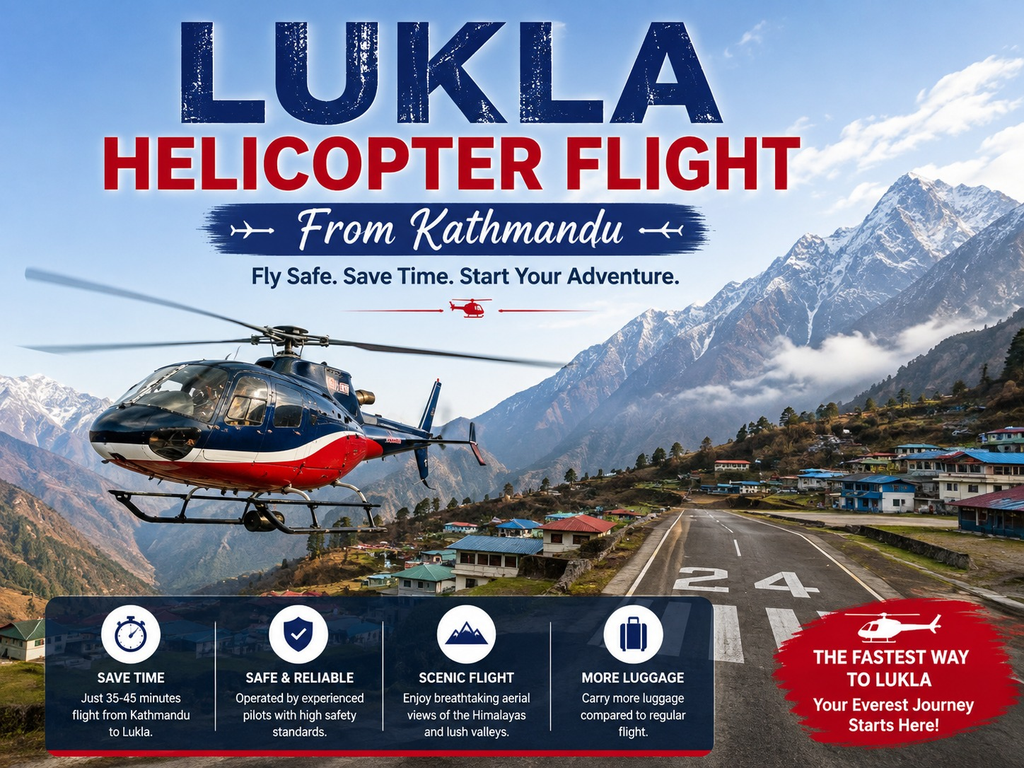
What Happens on the Kathmandu–Lukla Flight
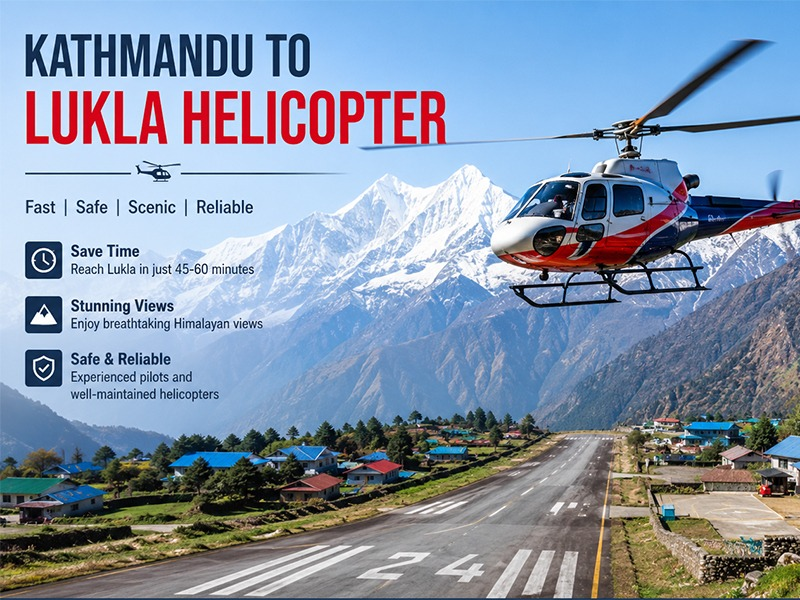
You lift off from Kathmandu, usually early, and the city’s tangle of rooftops gives way to terraced hills surprisingly fast. Further on the ridges get steeper and the first snow peaks start showing up on the horizon. The Kathmandu to Lukla helicopter segment is the opening act rather than the main event, but it’s a good one. Just remember that weather in the hills and air traffic around Kathmandu both decide when you really leave, so a schedule on paper is only a plan.
Why Lukla Matters on This Route
Lukla is the front door to the Khumbu. Trekkers fly into its small airport before walking north, and on this route it works mostly as an access point, not a sightseeing destination. If the operator needs a short stop on the ground here, that’s normal. Then the helicopter carries on toward the higher valley.
From Lukla Toward Everest: Entering the Khumbu
North of Lukla the valley narrows and climbs. You pass over the Namche Bazaar area, where the Sherpa town curls into its hillside, and the terrain gets bigger and rockier every few minutes. Trekkers spend days covering this stretch, with acclimatization stops built in. The helicopter squeezes it into a short flight, and that’s the whole appeal.
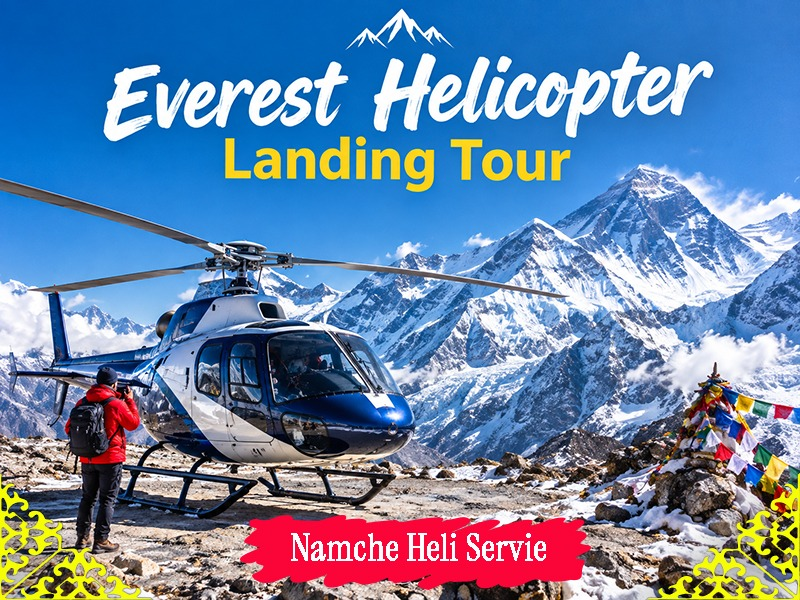
While researching, you’ll bump into operators such as Namcheheli among the services running Everest-area flights, so it’s worth checking each company’s details directly. One thing speed doesn’t change is altitude. Your body still ends up at heights that normally take several days to reach, and the high peaks of Sagarmatha don’t care how quick your ride was.
Lobuche: The Key Point on the Return Route
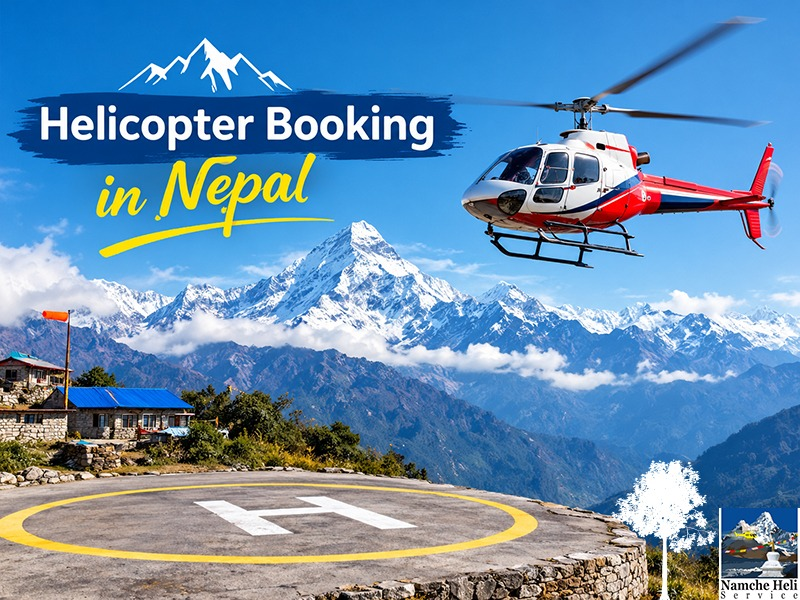
Lobuche sits in the upper Khumbu on the trekking path toward Gorakshep, the last settlement before Everest Base Camp, and close to the Khumbu Glacier. Kala Patthar, the famous viewpoint, is nearby too. That position is exactly why Lobuche shows up in helicopter itineraries: it’s deep enough in the high country for big views, and it works as a turning point before heading home.
The Lobuche to Kathmandu helicopter leg is basically the journey in reverse, down the valley and back out of the mountains. If you do land at Lobuche, expect a short stay in thin, cold air with time for photos and a look around. Don’t picture a relaxed picnic. Move slowly, drink water, and listen to the crew.
Here’s the part people miss. A planned landing and an actual landing aren’t always the same thing. Wind, cloud or other local conditions can shorten a stop or cancel it altogether, and pilots make that call for flight safety. Good operators adjust the itinerary on the day, and that’s a feature, not a flaw.
How the Kathmandu–Lukla–Lobuche Route Works
Kathmandu → Lukla → Khumbu/Everest area → Lobuche → Kathmandu
Think of it as a loop with a few distinct jobs. Kathmandu to Lukla is mainly flying. Lukla may involve a short ground stop. The Khumbu stretch is mostly sightseeing from the air, and Lobuche is where landing time, if it happens, comes in. After that you head back.
The return can be described as a Lukla to Kathmandu helicopter flight in some itineraries, but the exact routing depends on operational conditions on the day, so don’t treat it as fixed. Keep some flexibility in your head. Treating every minute as guaranteed is how people end up stressed over something nobody controls.
Timing, Altitude and What Can Change on the Day
Timing
Early departures are common because mountain conditions tend to get worse later in the day. Total duration depends on the route, stops, weather, air traffic and landing conditions, so ask the operator for their own estimate rather than trusting a number from a blog, including this one.
Altitude
The elevations are wildly different. Kathmandu is around 1,400 metres, Lukla just under 2,900, Namche around 3,400, Lobuche close to 4,900, and Everest Base Camp about 5,300. Flying up fast doesn’t cancel out altitude. Even a short visit up high can bring headaches or nausea for some people, so don’t assume a quick tour means no effect.
Weather
Cloud, wind and poor visibility can delay a flight, shorten a landing or remove it entirely. That’s about safety, not bad service. Build slack into your onward plans.
What You Actually See From the Helicopter
The change is gradual, then sudden. Kathmandu’s sprawl turns into green hills, then rough Himalayan terrain with villages perched on slopes that look far too steep for houses. Over the Khumbu Valley the rivers shrink and the snow line closes in. Then come the big names: Mount Everest, Lhotse, Nuptse and the unmistakable shape of Ama Dablam, plus the grey, broken surface of the Khumbu Glacier near Everest Base Camp. From above you read the whole landscape at once, how valleys connect and how huge everything is, which trekkers only piece together over many days on foot.
Practical Things to Know Before Taking the Flight
Bring your passport or other identification and your essential personal items. Dress in layers, because the cabin and the landing spots won’t feel like Kathmandu. Follow the baggage and passenger weight rules the operator gives you, since helicopters are strict about this. Keep any medication within easy reach.
Listen to the pilot and crew about landing and where to walk. Don’t book a tightly timed international flight for the same day you return, because delays happen. Before departure, confirm the exact itinerary, planned landing points and the weather cancellation policy. Travel insurance that covers helicopter flights is worth checking too.
Who This Route Makes Sense For
It suits travelers with only a few days in Nepal, couples and families, older visitors who’d rather skip a long trek, and anyone wanting an aerial look at Everest without walking the full route. Be honest with yourself though: this is not the same as trekking to Everest Base Camp. You get limited time on the ground and a very different relationship with the landscape.
Frequently Asked Questions
1. Can I take a helicopter from Kathmandu to Lukla for an Everest tour?
Yes. The Kathmandu to Lukla Helicopter flight is usually the first stage of the tour, timing depending on weather and air traffic.
2. Does the Everest Base Camp Helicopter Tour return from Lobuche to Kathmandu?
Often, yes. Lobuche works as a high-altitude stop before the flight back, though the exact routing can change on the day.
3. How does a Lukla to Kathmandu Helicopter flight work on the return journey?
Some itineraries route the return through Lukla. Weather, air traffic and operational conditions decide the final path, so confirm it with your operator.
4. Can the helicopter land at Everest Base Camp?
Don’t count on it. Landing locations depend on aviation rules, weather, operations and local conditions, so an Everest Base Camp landing is never automatic.
5. What happens if the weather is bad during the helicopter tour?
Flights can be delayed, rerouted, shortened or cancelled, and landings may be dropped. The operator’s policy covers what happens next.
6. Is Lobuche safe for a short helicopter stop because it is at high altitude?
For most people a brief stop is manageable, but the elevation still counts. Take it seriously, move slowly and tell the crew if you feel unwell.
Contact Details
———————————-
Namche Heli Service
Namche Bazzar, Solukhumbu, Nepal
(Branch Office :Kathmandu Naya Bazar)
+977-985-2850192 (WhatsApp)
Email: [email protected]
URL: www.namcheheli.com