Where to Buy Lederhosen: Stores, Online Options and What to Pay
The buying question arrives for everyone eventually — usually a few weeks before a festival, sometimes a few days. Where to buy lederhosen splits into a handful of real channels: local costume shops, the rare brick-and-mortar Trachten retailer, general marketplaces, and dedicated online specialists — and the channels differ enormously in what they actually stock, what it costs, and whether it survives the event it was bought for. This guide compares every channel honestly, maps the price tiers so you know what any number on a tag actually buys, explains the German-import question, and lays out the timing strategy that determines whether you choose from a full catalog or from what’s left.
The Channels Compared
Local Costume and Party Shops
The most accessible channel and the least suitable one. Costume shops stock exactly what their name says: party-tier vinyl imitations with printed decoration, elastic waists and one-night lifespans. For a knowing fancy-dress purchase they serve their purpose; for anyone attending a real festival, the channel simply doesn’t carry the product being searched for. The convenience is real; the category isn’t.
Brick-and-Mortar Trachten Stores
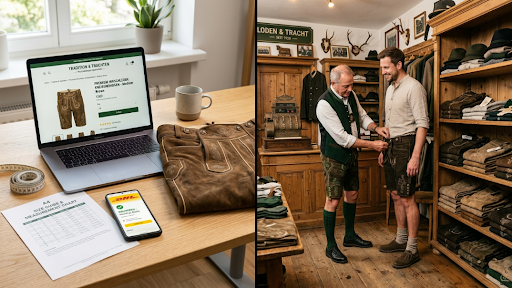
The genuine physical lederhosen store — a dedicated Trachten retailer with real leather stock and fitting service — is the gold-standard channel where it exists. The problem is geography: outside German-speaking Europe and a handful of German-heritage towns, dedicated Trachten retail is vanishingly rare. Buyers near one should absolutely use it; the overwhelming majority of buyers aren’t.
General Online Marketplaces
The big marketplaces list everything under one search — authentic pairs and costume tiers side by side, often with identical photography. The channel can work, but it transfers the entire quality burden to the buyer: every listing must be screened personally (named leather, stitched embroidery, measurement sizing, honest pricing), reviews must be read for the vinyl tells, and returns policies checked before commitment. It is the channel for confident authenticators with time to filter.
Dedicated Online Specialists
For most buyers in most places, the specialist online retailer is the channel that solves the problem: curated authentic stock across cuts, sizes and price tiers, measurement-chart sizing with guidance, product photography that shows construction details, and category expertise built into the catalog itself. The channel’s advantages compound for outfit-building — shirts, suspenders, socks and shoes sized and styled to pair with the trousers — which is why the complete lederhosen outfit buy increasingly happens in one specialist cart rather than assembled across channels.
Sizing Right When Buying Online
Because most buyers now purchase without a fitting room, online sizing technique decides more outcomes than channel choice does. The method is short and non-negotiable: measure the natural waist and seat with a soft tape (not a guess from jeans sizing, which maps to nothing in Trachten patterns), consult the specific retailer’s chart for the specific garment (charts genuinely differ between makers and even between cuts), and when between sizes, take the smaller for the leather’s molding behavior — unless the seat measurement objects, in which case fit the seat and let the lacing adjust the waist.
Three online-specific safeguards complete the technique. Photograph the chart and your measurements together at order time, so any exchange conversation starts with facts. Check the exchange policy before checkout, not after arrival — quality specialists expect first-pair exchanges and price them into service. And order with calendar margin: a fit exchange handled three weeks before the festival is a non-event; the same exchange five days before is a crisis the whole channel structure can’t fix.
What to Pay: The Price Tiers Decoded
Prices in the category are unusually informative once the tiers are known. The costume tier lives far below genuine-leather economics — the territory where vinyl and elastic are the only possible materials, whatever the listing claims. The accessible authentic tier begins where real suede cowhide becomes affordable: genuine leather, stitched embroidery, working construction — the correct entry point for most first-time buyers, and where the best lederhosen value in the category sits. The mid and premium tiers add finer hides (goatskin, then soft deerskin), richer hand-finished detailing and heirloom-grade construction — purchases that make sense for frequent wearers, formal registers and buy-once buyers.
The single most useful pricing rule: genuine leather sets a structural price floor. Lederhosen for sale dramatically below it are answering the authenticity question with the price tag.
The Germany Question
Many buyers assume authenticity requires ordering lederhosen from germany directly — and the assumption deserves an honest answer. German and Austrian origin carries genuine heritage weight, and premium German workshop pairs are superb. But authenticity lives in construction, not shipping origin: genuine hide, real embroidery, traditional patterning and proper hardware define the real article wherever it ships from, and specialist retailers deliver exactly that standard internationally — typically with better sizing support, faster delivery and easier returns than transatlantic ordering provides. Buy the construction, not the postmark.
Timing: The Strategy Nobody Follows and Everyone Should
The category runs on a hard seasonal cycle, and timing beats every other buying skill. Festival demand concentrates in late summer as every Oktoberfest on earth approaches at once — and popular sizes in popular styles sell through first, every single year. The strategy: buy lederhosen in late spring or early summer, when full catalogs are available, made-to-order timelines are comfortable, and the leather has time to begin its break-in before the first event. The buyer ordering in June chooses from everything; the buyer ordering the week before the festival chooses from the remainders — at the exact moment they care most.
Off-season buying adds a second advantage: end-of-season availability and the calm to authenticate properly, without a deadline pushing the decision.
After the Purchase: Arrival, First Fitting and Break-In
The buying process ends not at checkout but at the first correct wearing, and the arrival routine protects everything the channel and price decisions got right. Unbox and inspect immediately: leather surface, embroidery stitching, button attachment, lacing eyelets — the five-minute check that starts any exchange clock with maximum runway. Then the first fitting, done properly: shirt tucked, trousers at the natural waist, suspenders attached and tensioned, lacing adjusted — the configuration the size chart was actually describing, and the only fitting that tells the truth. A new pair should feel snug and structured; alarm bells are strain at the seat, a waist that gaps at the lacing’s tightest setting, or a hem landing visibly wrong.
Fit confirmed, begin the break-in on the spot: a few evenings of home wear before the event, letting the leather start its molding while exchange options still exist. The complete sequence — inspect, fit, break in, with margin — is what separates buyers who spend festival day one comfortable from buyers who spend it discovering what they should have checked three weeks earlier.
Renting vs Buying: The Honest Comparison
One more channel deserves an honest verdict: rental. Festival-city rental shops and online costume rental serve a real niche — the genuinely one-time wearer, the traveler who arrived without an outfit, the last-minute invitation — and for that niche they beat the costume-purchase tier on quality per dollar, since rental stock is typically real leather maintained for reuse. The limits are equally real: rental pricing for a single festival weekend approaches the entry price of owning, sizing comes from available stock rather than your measurements, the pair arrives with someone else’s break-in rather than starting yours, and nothing accumulates — a second festival means paying again from zero. The arithmetic therefore resolves by honest self-assessment: certain this is a one-time event, in a city with quality rental stock, renting is defensible; any possibility of a second festival — and second festivals have a way of happening — makes buying at the accessible authentic tier the better answer within a single season, with the pair improving and the cost amortizing every year after.
Frequently Asked Questions
Where can I buy authentic lederhosen?
A dedicated Trachten store if you live near one; otherwise a specialist online retailer — the channel with curated authentic stock, measurement sizing and outfit-building range.
Are costume shop lederhosen worth buying?
Only for knowing one-night fancy-dress use. For real festival attendance, the channel stocks vinyl imitations, not the garment being searched for.
How much should real lederhosen cost?
Above the genuine-leather price floor: accessible suede tiers at the entry point, rising through goatskin to premium deerskin. Prices far below the floor are announcing vinyl.
Do lederhosen need to come from Germany to be authentic?
No — authenticity is construction (real hide, stitched embroidery, traditional patterning), not shipping origin. Specialist retailers deliver the standard internationally.
When should I buy for Oktoberfest?
Late spring to early summer — full catalogs, comfortable timelines and pre-festival break-in. Late-summer buyers choose from what’s left in their size.
What if my lederhosen don’t fit when they arrive?
Exchange early — inspect and fit-test the day of arrival, with shirt tucked and suspenders tensioned, so any size swap happens weeks before the event rather than days.
Is it safe to buy lederhosen online?
With technique, yes — measurement-based sizing against the retailer’s own chart, exchange policy confirmed before checkout, and calendar margin for a swap make online the strongest channel most buyers have.
The Buying Answer, Complete
Where to buy lederhosen resolves into a short honest map: the Trachten store if geography grants you one, the specialist online retailer for everyone else, marketplaces only with your authentication screen fully engaged, and costume shops only for costume nights. Pay within the tiers knowingly, judge construction over origin, and order months before the season instead of days before the event — and the pair you buy will be the one worth buying: real, right-sized, and already yours before the rush even begins.